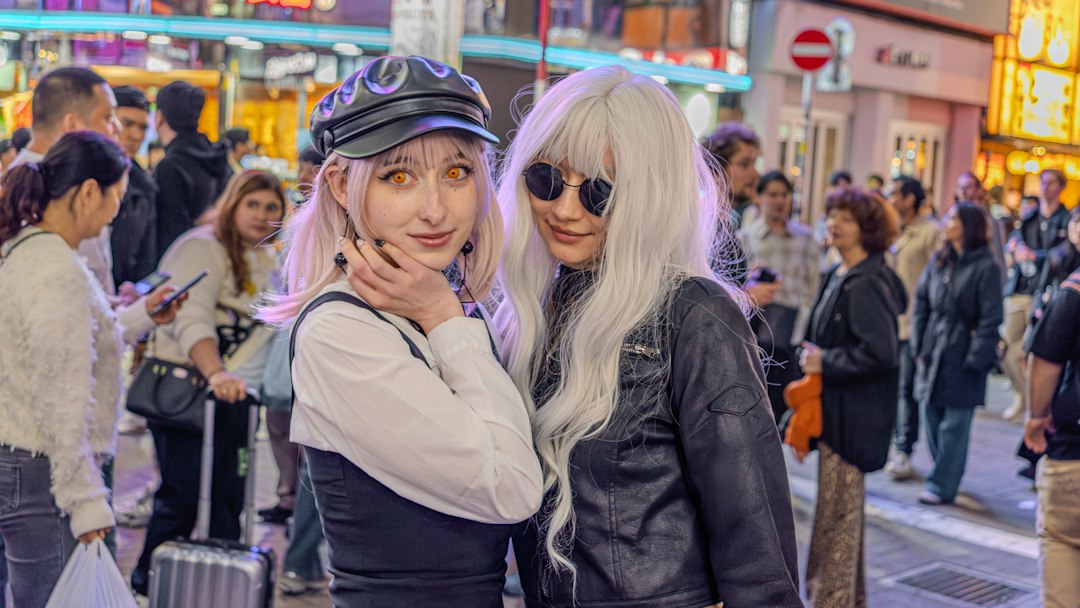
At Comiket, the cosplay photography area sits in a roped-off section near the Seiden Plaza outside Tokyo Big Sight’s West Hall — you line up, show your wristband, and you get maybe 30-60 seconds per cosplayer before the volunteer staff wave you along. That’s the reality of shooting cosplay at a major Japanese convention: it’s organized, time-limited, and governed by unwritten rules that locals follow without thinking twice. If you show up with a DSLR and no idea how the system works, you’ll either get politely shooed off or, worse, become the gaijin everyone complains about on Twitter that evening.
Register Before You Shoot, Not After
Nearly every large event — Comiket at Tokyo Big Sight (take the Yurikamome Line to Kokusai-Tenjijo-Seimon Station, about 5 minutes from the exit to the venue, or the Rinkai Line to Kokusai-Tenjijo Station), AnimeJapan at Makuhari Messe (Kaihin-Makuhari Station on the Keiyo Line, roughly 30 minutes from Tokyo Station), or the World Cosplay Summit in Nagoya’s Oasis 21 — requires cosplayers to register their costumes at a dedicated desk, usually for a few hundred to 2,000 yen. Photographers don’t always need to register separately, but you do need to stay inside the marked cosplay photo zone. Wandering the general exhibition floor with a telephoto lens pointed at someone’s costume is one of the fastest ways to get flagged by staff wearing the yellow or green vests.
Always Ask First — And Mean It
The phrase you want is simple: “Shashin ii desu ka?” (写真いいですか, “Is a photo okay?”). Say it, point at your camera, and wait for a nod. Some cosplayers will strike a pose immediately; others will hold up a small sign reading “撮影不可” (satsuei fuka, “no photography”) pinned to their costume, especially if they’re just walking between halls rather than posing. Respect that sign the same way you’d respect a closed shop shutter — it’s not up for negotiation. At Comiket specifically, cosplayers who are registered and standing in the photo corral have implicitly agreed to be photographed, but even there, a quick nod before raising your camera is standard courtesy, not optional extra politeness.
No Touching, No Directing Hands-On
This sounds obvious but comes up constantly with prop weapons and elaborate wigs. Don’t adjust someone’s costume, don’t move their prop into a “better” position, and don’t grab an arm to reposition a pose. If you want a specific angle, ask verbally — “Could you turn slightly to the left?” works fine even in broken Japanese plus gestures. Many elaborate costumes (think layered Fate/Grand Order armor or Genshin Impact outfits with wire-supported capes) are held together with pins and double-sided tape that can fail if touched. I’ve watched a Fujiwara no Mokou wig shift and take ten minutes to fix after a photographer grabbed the model’s shoulder to turn her — the whole line behind them had to wait.
Prop and Weapon Rules Are Not Suggestions
Comiket’s rulebook (distributed as a PDF called the “Cosplay Area Guide” on the official site before each event) specifies that blade-type props must be blunted, often zip-tied inside a sheath, and under a certain overall length — real metal is banned outright. Staff do spot checks, and a cosplayer who gets stopped will lose photo time dealing with it, so don’t ask someone to brandish an oversized prop in a way that draws attention from security. If you’re photographing near the general public walkway rather than the enclosed cosplay zone, assume any prop longer than your forearm needs to stay lowered until you’re actually shooting.
Technical Etiquette: Flash, Tripods, and Lenses
Flash photography is restricted or banned at most indoor cosplay areas, partly because of crowd density and partly because the strobing bothers people queuing nearby. Bring a lens that performs reasonably at f/2.8 indoors rather than relying on flash — Tokyo Big Sight’s exhibition halls are bright enough under the fluorescent lighting that ISO 1600-3200 on most modern mirrorless bodies handles it fine. Tripods and monopods are almost universally banned in cosplay photo corrals because of the tight space and fire-code aisle-width requirements; a tripod becomes a tripping hazard the moment 40 people are queued in a 3-meter-wide pen. Monster zoom lenses (anything over 200mm) also tend to draw annoyed looks since they require you to back up into other people’s shooting lines.
Posting Photos Online: The Part Foreigners Get Wrong
In Japan, many cosplayers consider their face and costume combination as something they control the circulation of, even in a public photo area. It’s increasingly common for cosplayers to ask, after the shoot, “SNS ni agete mo ii desu ka?” (“Is it okay to post this on social media?”) — and you should ask them the same question in return, or at minimum offer to show them the shot. If a cosplayer gives you a business-card-style slip with their Twitter/X handle, that’s usually an invitation to tag them when you post, and doing so is considered good manners rather than optional. Posting a clear face shot without any tag or acknowledgment, especially if the cosplayer specifically requested no SNS upload, is the single biggest etiquette complaint you’ll find in Japanese cosplay photography forums.
Reading the Room: Lines, Time Limits, and Group Shoots
When there’s a line behind you — and at events like Comiket, held twice yearly in summer and winter, there almost always is — limit yourself to three or four frames per pose before stepping aside. Group photographers (a cluster of five or more lenses aimed at one cosplayer) typically self-organize into a loose queue; join the back of it rather than pushing to the front with a bigger lens. At smaller regional events, like doujin conventions in Osaka’s Intex Osaka or hobby markets in Nagoya, the atmosphere is far more relaxed and one-on-one conversations before shooting are normal and even expected.
A Practical Warning Before You Go
One thing that catches first-timers off guard: weather and venue temperature control at outdoor cosplay meetups — Harajuku’s Yoyogi Park on a Sunday, for instance, or the Nagoya World Cosplay Summit’s outdoor stage area — can mean cosplayers in full wig and layered costume are dealing with heatstroke risk, particularly from June through September. If a cosplayer looks pale, asks to sit, or cuts a shoot short, don’t push for “just one more shot.” Staff at official events carry cooling packs and water for exactly this reason, and prioritizing someone’s comfort over your photo queue is the fastest way to be remembered as a photographer cosplayers actually want to work with next time.
Photo by Bhanu Singh on Unsplash