The Short Answer First
If you only have one night, go to Nabana no Sato in Kuwana, Mie Prefecture, where the food stall street runs almost the full length of the illuminated “Kagerou no Mori” garden and sells everything from hoba miso grilled on cedar leaves to hot Ise udon for around ¥700-900 a bowl. If you’re based in Tokyo and don’t want a day trip, Yomiuriland’s Jewellumination has a proper food court built into the slope below the Ferris wheel, open until 10pm most nights through early February. Everything below is based on actually standing in these lines in December, holding a paper cup of amazake with frozen fingers, so take the opening hours as a starting point and always check the official site for the current season’s exact closing date, since most of these events end between January 3 and mid-February and some pause entirely on New Year’s Eve.
Nabana no Sato, Mie Prefecture — the biggest stall lineup in the country
This is a flower park near Kuwana that turns into roughly 8.5 million LED bulbs from mid-October through early May, with the core winter illumination season running November through March. The food stalls sit along the main path between the ticket gate and the Light Tunnel, plus a second cluster near the Begonia Garden greenhouse where you can actually sit indoors and warm up. Expect hoba miso (miso and vegetables grilled on a magnolia leaf, about ¥600), Kuwana hamaguri clam skewers (the city is known for clams), Ise udon in a thick tamari-based broth, and a long line for the wisteria-shaped soft-serve stand near the entrance even in winter. Entry is ¥2,300 for adults in high season, but it includes a ¥1,000 food-and-drink coupon booklet usable at the stalls, which effectively makes most of the small bites close to free. Access is Kintetsu Nagoya Line from Kintetsu Nagoya Station to Kuwana Station (about 20-25 minutes on a limited express), then the free shuttle bus from the station’s east exit, which takes another 20 minutes and runs roughly every 15-20 minutes until the park closes. Last shuttle back is usually around 21:30-22:00, so don’t linger too long at the final photo spot.
Kobe Luminarie — Nankinmachi Chinatown right next door
Luminarie itself is a short-run event, typically about 10 days from early-to-mid December, and it’s the walk-through light arches near Motomachi Station (JR Kobe Line or Hanshin Main Line, about 5 minutes on foot from the Higashi-Yuenchi exit) that everyone photographs. What most guides skip is that Nankinmachi, Kobe’s Chinatown, is a 3-minute walk south of the arches and stays open late during the Luminarie run specifically because of the crowds. Roshoki and Choeiro, two of the long-standing steamed bun shops on the main street, sell buta-man (pork buns, about ¥350-450 each) straight from bamboo steamers set up on the street, and that’s realistically a better winter food stop than anything inside the Luminarie zone itself, where stalls are thinner and prices run higher because of the one-way crowd flow.
Sapporo White Illumination and the Munich Christmas Market, Odori Park
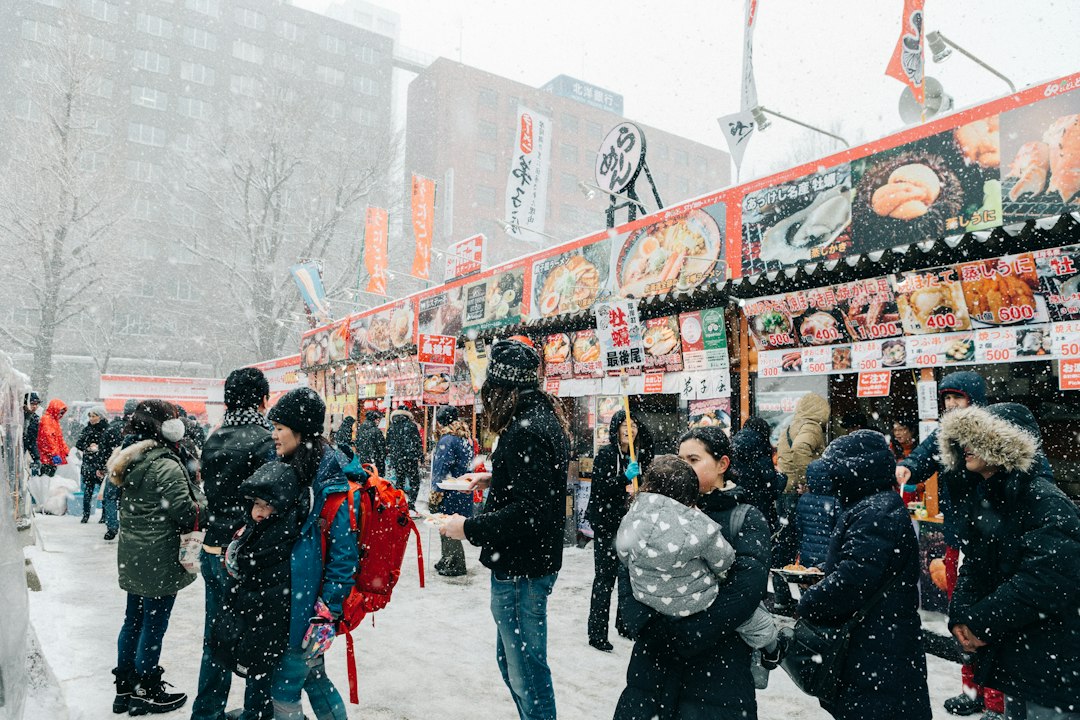
Odori Park’s illumination runs from late November into late December or early January depending on the block of the park, and the Munich Christmas Market sets up in the 1-chome and 3-chome sections with actual German-style wooden huts imported through Sapporo’s sister-city tie with Munich. You’ll find Glühwein (mulled wine, served in a souvenir mug you can keep for a deposit, around ¥1,000 total), bratwurst in a bun for roughly ¥600, and local additions like Sapporo soup curry cups and grilled potato with butter and salted kelp. The market area is open roughly 11:00-21:00 with the lights staying on later; nearest station is Odori Station on the Sapporo Municipal Subway (Namboku, Tozai, or Toho lines), exit directly into the park. Sapporo in December means real snow and temperatures regularly below freezing after dark, so this is the one on this list where you actually need insulated boots, not just a warm coat — the ground stalls get slushy and icy by 8pm.
Yomiuriland Jewellumination, Tokyo
This is the most convenient option if you’re staying in central Tokyo and don’t want a long train ride. Take the Keio Line to Keio Yomiuriland Station (about 30 minutes from Shinjuku) and then the gondola (Sky Shuttle) up the hill, which is itself part of the illumination experience after dark. The food court near the central plaza sells grilled oysters from Hiroshima (about ¥500 for two), takoyaki, and hot amazake, and there are heated benches scattered around that section specifically because the park knows people stall out there to eat rather than keep walking. The illumination runs roughly early November through early April, with the heaviest crowds on weekend nights in late December, so a Tuesday or Wednesday visit cuts the food line wait roughly in half based on past visits.
Ashikaga Flower Park, Tochigi — Flower Fantasy
Famous for its wisteria in spring, but the winter “Flower Fantasy” illumination (roughly late October through early February) uses the bare wisteria trellises as light sculptures, and the food stalls near the main square lean into local Tochigi produce — strawberry daifuku, yuzu hot drinks, and oden simmered in a dashi that locals say changes slightly every winter. Access is the direct JR Ryomo Line to Ashikaga Flower Park Station, which literally didn’t exist until the park successfully lobbied JR East to add it — a roughly 90-minute ride from Tokyo’s Asakusa area via the Tobu Line is the more common route tourists actually use, changing at Tobu-Ashikaga Station and taking a short taxi or bus from there.
What the Stalls Actually Sell (and What’s Worth Ordering When It’s Cold)
- Amazake — a sweet, low/no-alcohol fermented rice drink sold hot in paper cups almost everywhere, usually ¥300-400, genuinely the best thing for warming your hands and stomach at once
- Oden — fish cakes, daikon, and eggs in dashi broth, sold by the piece (around ¥150-250 each) at nearly every illumination food area from Sapporo to Mie
- Yaki-imo (roasted sweet potato) — often sold from an actual drum-can roaster parked near the entrance, around ¥400-500
- Regional specialties tied to the venue — hoba miso at Nabana no Sato, Hiroshima oysters at Yomiuriland, bratwurst at Sapporo’s Munich market — these are usually worth the slightly higher price over the generic takoyaki stand
Practical Tips Nobody Mentions in the Brochure
Most stalls are cash only even now, so carry ¥1,000 and ¥500 coins rather than relying on a credit card or IC card like Suica — some larger venues like Nabana no Sato now accept IC cards at food stalls, but smaller independent vendors at Luminarie or Ashikaga Flower Park often don’t. Bring a pair of thin gloves you don’t mind getting greasy, since eating standing up in near-freezing temperatures while trying to hold a phone for photos is the actual experience, not the glossy illumination shot everyone posts. Standing tables near the stalls fill up fast after sunset (roughly 16:30-17:00 in December), so if you want to actually sit and eat rather than eat while walking, arrive at the food area before the main illumination switches on.
Timing It Around New Year Crowds
Late December 23 through January 3 is the worst window for both illumination viewing and food stall lines nationwide, since it overlaps with winter school holidays and the run-up to hatsumode shrine visits. If your schedule is flexible, aim for a weekday in the first two weeks of December or the second week of January instead — most of these illuminations run well past New Year, and the food stalls are identical, just with a third of the wait. Weeknights after 20:00 also tend to thin out noticeably at Tokyo-area venues, though Sapporo’s market stays busy later into the evening because locals treat it as an after-work stop rather than a tourist-hours event.
One Practical Warning Before You Book Anything
Food stall lineups at these events are not fixed year to year — operators rotate out, and a particularly good hoba miso vendor one winter may be replaced by a different one the next. Several venues, including Nabana no Sato and Ashikaga Flower Park, also shorten food stall hours or close some outdoor stands entirely during heavy snow or strong wind, even if the lights themselves stay on, so if the food is your main reason for going, check the venue’s official social media account the morning of your visit rather than relying on a blog post, including this one, for exact stall hours.
Photo by Denny Ryanto on Unsplash