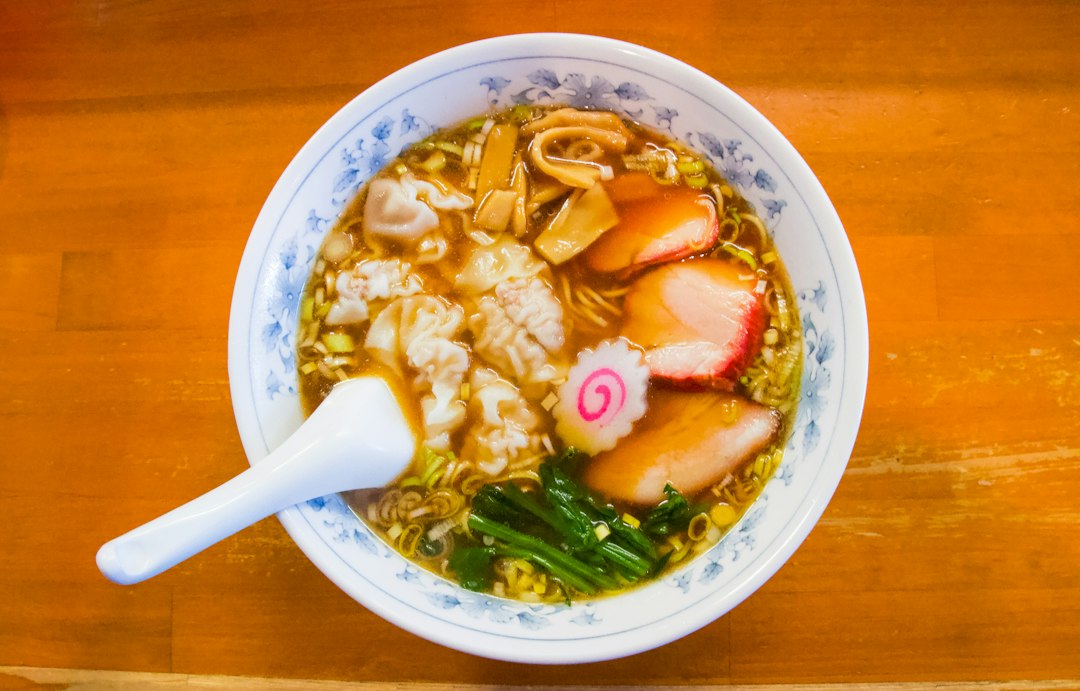
Here’s the part nobody tells you before you land: even ramen that looks vegetarian in Tokyo — the clear shio bowls, the vegetable tempura toppings, the “yasai ramen” on an English menu — is almost always built on a tare (the seasoning base) that contains katsuobushi or niboshi. The broth itself can be 100% kombu and shiitake, and the bowl will still taste like bonito because the tare was made separately with dried fish. So the real question isn’t “does this restaurant have a vegetable ramen,” it’s “did the kitchen make the tare without any fish at all.” Only a handful of Tokyo shops can say yes to that, and I’ve eaten at all of them.
Why This Is Harder Than It Sounds
Ramen broth (the stock, or “dashi”) and the tare are two different things that get combined in the bowl. A shop can proudly tell you the soup is vegetable-based and be telling the truth about the broth while the tare — the salty, umami-dense liquid ladled into the bowl before the broth goes in — still has niboshi (dried sardines) or katsuobushi (bonito flakes) in it. This is why asking “is the broth vegetarian?” gets you a yes that turns out to be wrong. You have to ask about the tare specifically, or just go to a shop that’s designed from the ground up to be fish-free.
Shops Where the Whole Bowl Is Actually Fish-Free
T’s TanTan — Inside Tokyo Station’s Ticket Gates
This is the one most people stumble onto by accident because it sits inside the JR ticket gates on the Keiyo Street underground passage, the long corridor that leads to the Keiyo Line platforms (21–23) used for trains to Narita and Kyushu Shinkansen transfers. T’s TanTan is fully vegan and also avoids the “five pungent vegetables” (garlic, onion, leek) in the shojin ryori tradition, so there’s zero ambiguity about hidden fish. The signature T’s Tantan Men runs about ¥990–1,250 and uses a sesame-soy milk base instead of pork or chicken fat. Hours are roughly 10:30–22:00 (check the board, as closing shifts earlier some days). If you’re not actually traveling that day, you’ll need a platform ticket (nyujoken, around ¥150 from the machines) or a tapped Suica/Pasmo to get inside and back out.
Soranoiro — Tokyo Ramen Street and the Itabashi Original
Soranoiro has a branch in Tokyo Ramen Street, the basement food alley (B1F, Yaesu side of Tokyo Station) where eight ramen shops sit side by side. Their Vegan Soba uses a soy milk and vegetable broth with no dashi of any kind, topped with roasted vegetables and sometimes a cherry tomato instead of chashu, around ¥1,250–1,350. The original, slightly more relaxed location is a short walk from Itabashi Station on the JR Saikyo Line (about 15 minutes from Shinjuku), and that’s the one to pick if you want to sit down without the Tokyo Station lunch rush around 12:00–13:00.
AFURI’s Vegan Yuzu Shio — Harajuku and Nakameguro
AFURI is famous for its citrus-forward shio ramen, and the standard version does use chicken and fish stock, so don’t assume. However, select branches — Harajuku and Nakameguro among them — carry a clearly labeled vegan yuzu shio ramen built on kombu and soy milk instead of the usual base, priced around ¥1,200. It’s worth confirming at the counter or picking it off the English menu insert rather than assuming every AFURI location stocks it, because not all branches do.
Ain Soph Journey — Shinjuku Gyoen-mae
A short walk from Shinjuku Gyoen-mae Station (Marunouchi Line), Ain Soph Journey is a fully vegan restaurant that rotates a ramen-style noodle dish through its menu, particularly at lunch. It’s not a dedicated ramen shop, so the format changes more often than at the specialists above, but everything on the menu is guaranteed free of fish, meat, eggs, and dairy. Lunch sets run roughly ¥1,400–1,800, open daily around 11:00–22:00.
Vegan Ramen UZU — Reservation-Only Counter
UZU is a small counter restaurant in Shinjuku doing a tasting-menu approach to vegan ramen — layered vegetable broths, house-made noodles, and seasonal toppings that change throughout the year. Seating is limited (single digits on a busy night) and reservations through their website are genuinely necessary; walking in without one often means no seat. Expect to pay more than at a standard ramen counter, somewhere in the ¥1,500–3,000 range depending on the course, but it’s the closest Tokyo gets to an actual vegan ramen tasting menu rather than a single fixed bowl.
Phrases to Confirm the Tare, Not Just the Broth
- “Niboshi ya katsuobushi wa haitte imasu ka?” — Does this contain dried sardines or bonito flakes?
- “Tare ni gyokai wa tsukatte imasu ka?” — Is seafood used in the tare (seasoning base)?
- “Watashi wa bejitarian desu. Dashi wa yasai dake desu ka?” — I’m vegetarian. Is the stock vegetable-only?
- “Niku mo sakana mo tabemasen” — I eat neither meat nor fish (useful shorthand if staff look unsure).
Ingredients That Sneak Fish Into “Vegetable” Ramen
- Katsuobushi dashi — used in tare even for shio and miso bowls that look purely vegetable
- Niboshi (dried baby sardines) — common in the cloudier, slightly fishy-smelling broths
- Gyokai-kei tare — literally “seafood-type” seasoning base, sometimes blended with pork for depth
- Furikake or bonito flakes used as a garnish on otherwise fish-free vegetable toppings
- Store-bought tsuyu (noodle sauce) in tsukemen-style dipping broths, which is almost always dashi-based
Getting There: The Quick Train Logic
If you’re staying near Tokyo Station or passing through on the Shinkansen, T’s TanTan and Soranoiro’s Ramen Street branch cover you without leaving the station complex. If you’re based in Shinjuku, Ain Soph Journey and Vegan Ramen UZU are both within a 10-minute walk of Shinjuku Gyoen-mae or Shinjuku Sanchome stations. Harajuku and Nakameguro (for AFURI) sit on the Chiyoda Line and Hibiya Line/Tokyu Toyoko Line respectively, both easily reachable within 20–25 minutes from most central hotels.
One Thing to Know Before You Go
Menus at these shops change seasonally more than regular ramen-ya do, since vegan broths rely on whatever vegetables are at their peak for depth of flavor, so the exact bowl you read about online might not be the one on offer when you show up — the fish-free guarantee stays the same, but toppings and even the tare recipe can shift month to month. Also worth knowing: several of these kitchens, including T’s TanTan, share fryers or prep space with items that aren’t strictly vegan, so if you’re managing a severe allergy rather than a dietary preference, ask about cross-contact specifically rather than assuming “vegan menu” means allergen-isolated kitchen.
Photo by Frank from 5 AM Ramen on Unsplash